


Video сourse: Deep Dive into LLM APIs
Mentor - Oleksandr Krakovetsky, AI Expert | CEO at DevRain | CTO at DonorUA | Author of books on generative artificial intelligence

This course is a practical and systematic guide to working with large language models for engineers, architects, and technical leaders who want to not just use LLMs, but understand how they work and how to build solutions for their projects.
You will understand the internal architecture of transformers, key properties and limitations of modern language models, learn how to correctly configure them via API, and work with typical problems - in particular, hallucinations, contextual limitations, and unstable response quality.
Special attention is paid to the transition from Prompt Engineering to Context Engineering: how to build systems where the model works stably within the given rules, knowledge, and tools. You will learn how to use LLM as a backend component, build RAG solutions, connect external tools, work with structured responses, and optimize token usage in real production scenarios.
The course combines theory with practical demos so that you can immediately apply the approaches in your own products, services, or internal platforms.
You will understand in detail:
- how modern language models work "under the hood"
- what mechanisms determine their behavior
- how to apply this knowledge to create reliable, manageable, and scalable solutions
A separate block is dedicated to working with benchmarks:
- how to correctly evaluate models
- what characteristics have practical significance
- how to interpret test results on instruction-following, working with long-term context, and other metrics
After the course, you will be able to test models for relevance to specific tasks and make technical decisions based on metrics, not intuition.
Who will be interested?
- Software developers
- Tech leaders
- Architects
- Anyone who wants to understand how language models work under the hood
Format:
- All course materials and videos are located on the learning platform. After purchasing a ticket, you will receive access to the course at the email address specified during registration (within 1-2 business days):
- Presentations
- Video recordings of sessions
- Mentor's e-book "Large language models, query engineering + agents"
Recommended set of tools and subscriptions:
- OpenAI API Playground (Anthropic API Playground, Google AI Studio Playground are also ok)
- Ollama
- Postman or other API-manager
Language of the event and presentations: Ukrainian
Program
Module 1
- Transformer architecture
- Key concepts, types, characteristics, and functionality of large language models
- API parameters for configuring the operation of large language models
- API evolution
- Metrics for assessing the quality of models
- Key characteristics of large language models (multimodality, hallucination, reasoning, non-determinism)
- From Prompt Engineering to Context Engineering
Module 2
- Structured responses
- Token optimization
- Building RAG solutions, typical problems
- Fine tuning
- Evals
- Instrumentalization: function calls, using external tools
- Benchmarks for model quality assessment ("instruction following", working with long context, AGI, etc.)
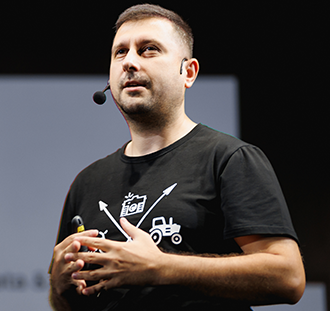
Mentor: Oleksandr Krakovetsky
— Co-founder and CEO of the Ukrainian IT company DevRain
— Co-founder and technical director of DonorUA - an intelligent blood donor recruitment system.
— Candidate of Technical Sciences in Information Technology.
—Microsoft Regional Director, Microsoft Artificial Intelligence Most Valuable Professional.
—Microsoft Certified: Azure Data Science Associate
Live course participant reviews: average score 9.5
If you are just starting your journey in development using LLM, or you already have experience and successfully implemented projects in this area - this workshop is for you. This is a unique opportunity to go from basic to quite complex things with the author of a book about large language models, who is also one of the best speakers in Ukraine in principle. The amount of information that was managed to fit into the fairly short framework of this master class is simply impressive. p.s. I have a separate innovation department in my company, which is also involved in AI and LLM, and this training is no worse than the materials it prepares. And the people there are engaged in this full-time :)
I really liked the course - the material is clearly structured and consistently explains how to work with LLM through APIs: from basic principles and query parameters to practical aspects of integration, context and model limitations. It is especially valuable for those who wanted to organize their knowledge or did not dare to dive deeper into working with APIs and understand what is happening "under the hood".
Who wants to open the "black box" and find out what is done inside the LLM, how to use them to the maximum and not drain the entire budget - very wellcome!